

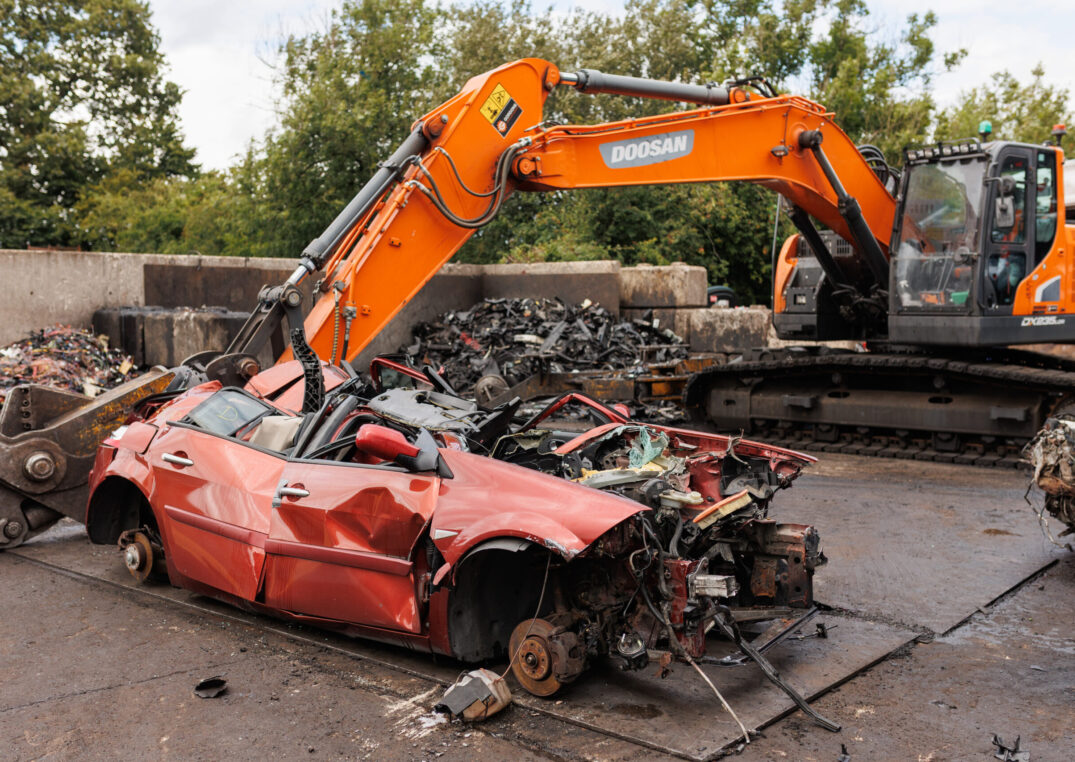
Every time an old vehicle is scrapped and its parts or materials are reused, we reduce the need to produce new components — saving massive amounts of energy and emissions in the process.
Why Manufacturing New Car Parts Is Carbon-Heavy
Building new vehicle components from scratch is resource-intensive: mining raw materials (iron, aluminium, copper, lithium), transporting them to factories, and high-energy processing and assembly. Each of these steps emits CO2 and other greenhouse gases. Producing a new steel car body can emit up to 2 tonnes of CO2, depending on the process.
Recycling Saves Energy, Emissions & Resources
- Reduces the need for raw material extraction
- Lowers energy consumption in manufacturing
- Prevents usable components from going to waste
Recycled steel uses 60–74% less energy than newly produced steel. The energy savings are even greater for aluminium — up to 95% less energy when recycled.
Carbon Savings in Real Numbers
Recycling or reusing parts from just one vehicle can: save 1–2 tonnes of CO2 emissions (vs. manufacturing new parts), offset the equivalent of driving over 5,000 miles in a petrol car, and prevent thousands of kilos of material from entering landfills.
How Ecopart Supports Low-Carbon Auto Recycling
From our licensed facility in Northern Ireland, Ecopart recovers engines, gearboxes, drivetrains, suspension and brake systems, batteries, doors, mirrors, lights, and more. We clean, inspect, and grade parts for reuse — either locally or through global export.
The Circular Economy in Action
By choosing to scrap your car with a responsible partner like Ecopart, you’re helping reduce global emissions, supporting sustainable manufacturing, and contributing to a greener, lower-waste economy.